

The workshop will bring together researchers and practitioners to explore the opportunities and challenges of developing sustainable artificial intelligence. Through a series of talks and a panel discussion, participants will gain insights into current research, emerging approaches, and practical considerations for creating environmentally responsible AI systems.
This workshop will take place in the Chancellor’s building 2.6. Registration deadline: Tuesday 20th October 2026, 12 noon, or earlier if room capacity is reached.

Programme
- 13:30 – Welcome
- 13:40 – Professor Steve Cayzer
- 14:00 – Dr Valeria Livina
- 14:20 – Miles Pemberton
- 14:40 – Coffee and cake
- 15:00 – Panel
- 16:30 – End
Speakers
- Professor Steve Cayzer | University of Bath | Sustainable AI?
- Dr Valerie Livina | National Physical Laboratory (NPL) | AI standardisation and sustainability
- Miles Pemberton | University of Bath, ART-AI CDT | AI for Sustainable Chemical Synthesis: The Greenest Reaction Is the One You Never Have to Run
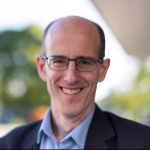
Professor Steve Cayzer
Title
Sustainable AI?
Abstract
Conversation around the sustainable impact of AI can be a divisive issue. I propose that among the reasons for this are:
- The data people use are often unreliable, opinion based or context free (not normalised)
- The scope is over narrow (sustainability is broader than energy, or water).
- Other perspectives, conflicts and tradeoffs are ignored or discounted.
I do not claim to have definitive answers to the question (perhaps oxymoron) of sustainable AI. But I can suggest a few useful questions we should be asking to improve our critical analysis, and to seek a more nuanced, illuminating, balanced and respectful conversation.
Biography
Professor Steve Cayzer is a Professor of Climate Education at the University of Bath. Before joining Bath, he spent 15 years in the IT industry, including at HP Labs, where he published on a range of AI-related topics, including artificial immune systems and knowledge management, while also working on the strategic implications of sustainability. Since joining the University of Bath, he has embedded sustainability into the formal, informal and subliminal aspects of teaching and learning. He currently leads the design and rollout of a cross-university sustainability framework for education. A long-standing advocate of active learning, he has explored both the pedagogical and sustainability implications of AI.
Dr Valeria Livina

AI standardisation and sustainability
Abstract
AI standardisation is a very broad topic, and I will discuss the ongoing activities of BSI (UK), CEN/CENELEC (EU), and ISO committees in this area. Metrology, the science of measurement, contributes to various aspects of standardisation. I will talk about the NPL work in this area and particular standardisation document, CEN/CENELEC TR 18145:2025 “Environmentally Sustainable AI”, which I led in development. I will present case studies, in which I will demonstrate how data quality and uncertainty quantification improve estimation of the environmental impact of AI.
Biography
Dr Valerie Livina is a Principal Scientist in the Department of Data Science & AI at the National Physical Laboratory (NPL). A mathematician specialising in time series analysis, she develops innovative methods to analyse complex data and identify early warning signs of critical transitions in dynamic systems. Her research has been applied across diverse fields, including climate science, ecology, and structural health monitoring.
Valerie has over 20 years of international research and teaching experience and has published more than 70 scientific papers. She is a Chartered Mathematician (CMath FIMA), a Fellow of the Institute of Mathematics and its Applications, and was recognised with the 2024 American Physical Society Outstanding Referee Award for her service to the physics community.
Miles Pemberton

Title
AI for Sustainable Chemical Synthesis: The Greenest Reaction Is the One You Never Have to Run
Abstract
Chemistry carries with it an inherent environmental cost. Chemical processes often rely on large quantities of solvents, reagents, and other materials, which can produce significant waste alongside the desired product. This is particularly true in pharmaceutical synthesis, where the manufacture of pharmaceutical products has been estimated to generate 25-100 kg of waste for every kg of product made.1 As such, there is a constant need to ensure that chemical processes are as efficient as possible, and that the development of new chemicals is well informed in order to reduce waste from failed or unproductive experiments.
This talk presents research on how applications of AI in chemistry can be used to understand and predict chemical reaction outcomes. By predicting reactivity, selectivity, and likely reaction success before entering the laboratory, AI methods can help prioritise more promising experiments, reduce unnecessary screening, and support the design of more sustainable synthetic transformations. These approaches are also aimed at complementing traditional modelling and simulation methods in computational chemistry, which can involve hundreds of thousands of CPU hours and carry their own environmental impact.2 AI can help by enabling accurate predictions to be made either through direct prediction of experimental outcomes, by acting as a surrogate for otherwise expensive computational models, or by reducing data requirements through data-efficient machine learning approaches.
Together, these methods offer a route towards rapid and efficient AI-assisted design of chemical processes that meet sustainability targets and support the development of new, bespoke fine chemicals and pharmaceuticals.
References: [1] Green Chem. 2023, 25, 1704-1728. [2] Green Chem. 2024, 26, 8669-8679.
Biography
Miles is a third-year PhD student with the ART-AI CDT at the University of Bath. His research, supervised by Dr Matthew Grayson in the Department of Chemistry, focuses on the application of machine learning to understand chemical reactions in pharmaceutical synthesis, and is part-funded by AstraZeneca. Prior to starting his PhD, Miles completed an undergraduate degree at the University of Nottingham, where his master’s project focussed on computational chemistry. He also spent two years working as a graduate scientist for AstraZeneca on their R&D Graduate Programme.
